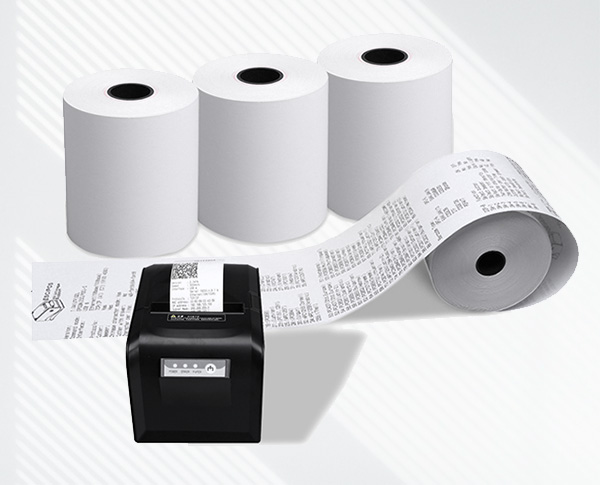
Through continuous iteration and updates, thermal paper has ushered in a more environmentally friendly, entirely new formulation. This is a human-imaging paper that does not rely on traditional chemical color-developing reactions. So, the question arises: what kind of reaction could it be if not chemical?
Answer: Color development achieved through changes in physical structure.
Conventional thermal coatings contain color developers such as BPA/BPS, where text and images are generated through chemical reactions triggered by heat. Even the somewhat higher-end BPA-free/BPS-free thermal papers are not entirely free of bisphenol chemicals—they are simply more environmentally friendly compared to conventional options.
Physical thermal paper deviates from conventional production methods and does not use bisphenol-based color developers. Its coating utilizes polymer materials that undergo localized physical changes when heated. The printer's printhead locally heats the surface to a specific temperature, causing the material structure to undergo phase transitions or rearrangement to produce color, without generating any new substances.
However, new technology often comes with a high price tag. It also places greater demands on the printhead, requiring stable temperature control and frequent cleaning. In other words, using physical thermal paper may necessitate switching to a new printer; otherwise, issues like insufficient color development may arise. This, in turn, raises the barrier to market understanding and adoption.